


Intermediate course in Tarifa: Your first rides
Intermediate course in Tarifa: Your first rides https://freeridetarifa.com/wp-content/uploads/2026/03/The-controle-of-waterstart-stand-up-freeridetarifa-1024x1024.jpg 1024 1024 Freeride Tarifa https://freeridetarifa.com/wp-content/uploads/2026/03/The-controle-of-waterstart-stand-up-freeridetarifa-1024x1024.jpg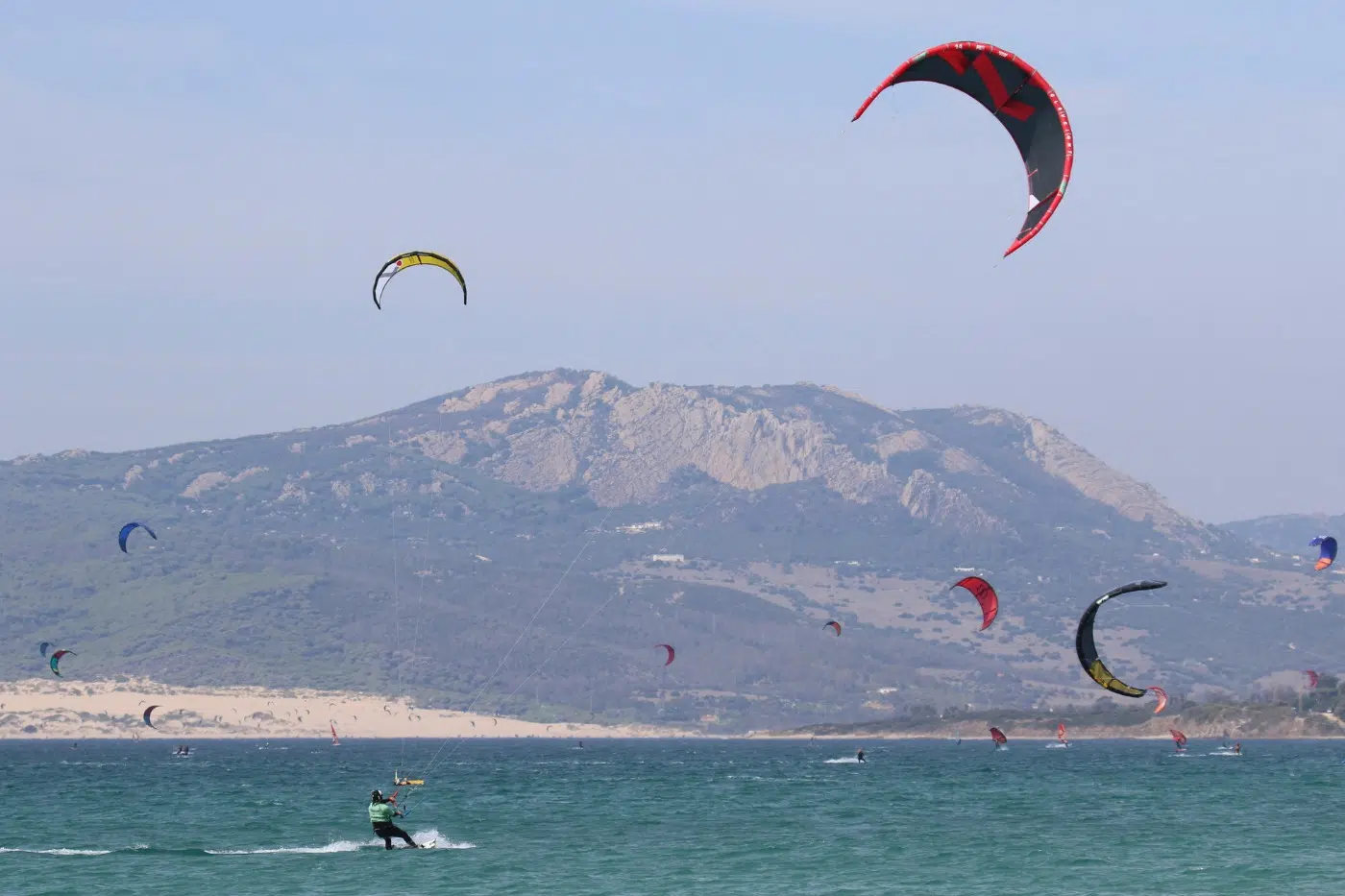
Every great kitesurfer remembers the moment the board finally clicks. Transitioning from the sand to the ocean is the most exciting leap in your progression. At Freeride Tarifa, our IKO Level 2 Intermediate course is designed to turn your land-based knowledge into fluid water skills. We focus on power control, body positioning, and the muscle memory needed for your very first meters of riding in the world-class conditions of the Strait of Gibraltar. Before you can use a board, you must learn to use the kite to pull your body through the water. This is a vital safety and navigation skill.
To ensure a logical progression, the IKO standards divide this stage into two distinct phases.
Phase A: Power Control & Deep Water Safety
Before standing on a board, you must become a master of the kite’s traction in the water. This phase focuses on Bodydragging.
Phase B: The Waterstart & First Rides
Once you are comfortable managing the kite’s power in the deep blue, we introduce the board.
Mastering bodydrag and the power of the kite
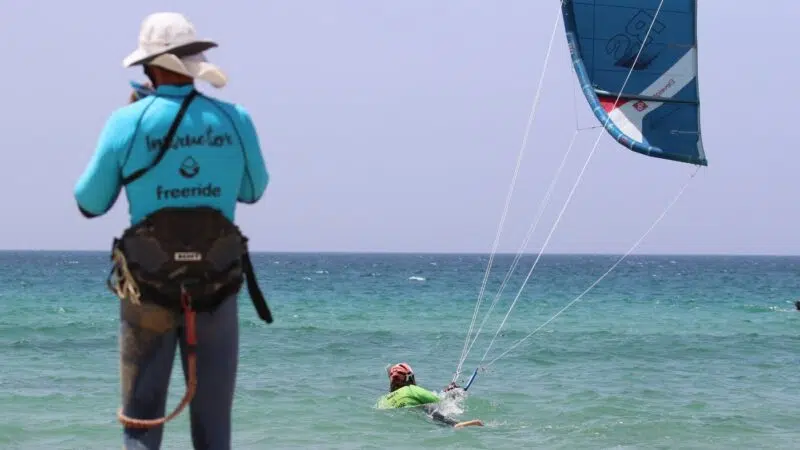
Day 2 shifts from the sand to the ocean, marking your first physical interaction with the water through Body Dragging. You will start by warming up on the sand to understand the exercices to do into the water.
This phase is critical for building confidence without the distraction of a board. Under the constant supervision of a Rescue Boat—a mandatory safety standard for Tarifa’s powerful offshore winds—you will learn to use the kite’s traction to pull your body through the water in controlled directions.
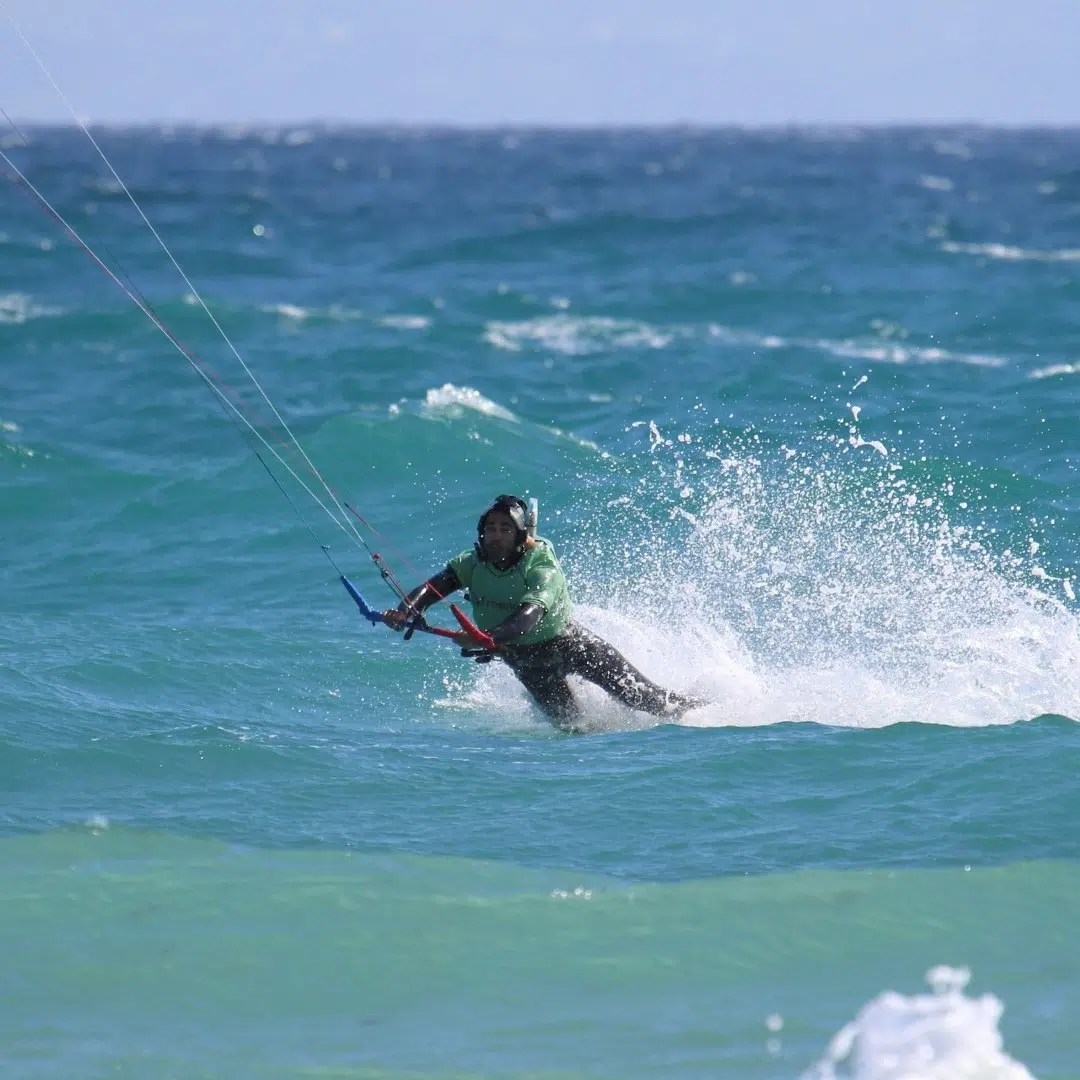
Downwind Body Dragging
You will learn to use the kite’s power to pull your body through the water. By steering the kite in “figure-eight” patterns, you generate the consistent pull needed to move across the surface. Called also the superman phase.
Upwind Body Dragging
Upwind Body Dragging is your most vital self-sufficiency skill to recover your baord and come back to the shore. By creating resistance with your body, you can navigate left / right to stay upwind and recover your gear safely. A must-have skill for independent kiter.
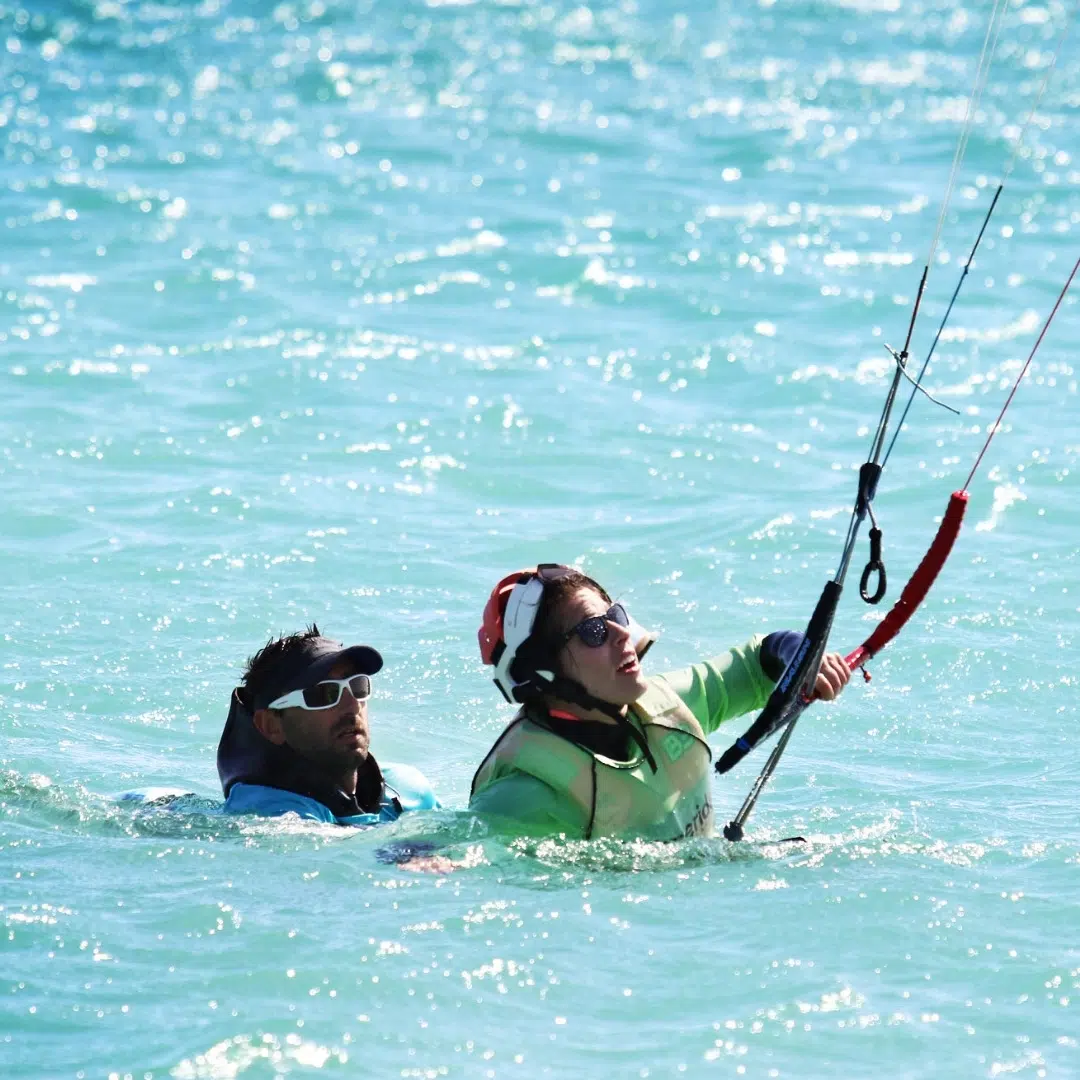
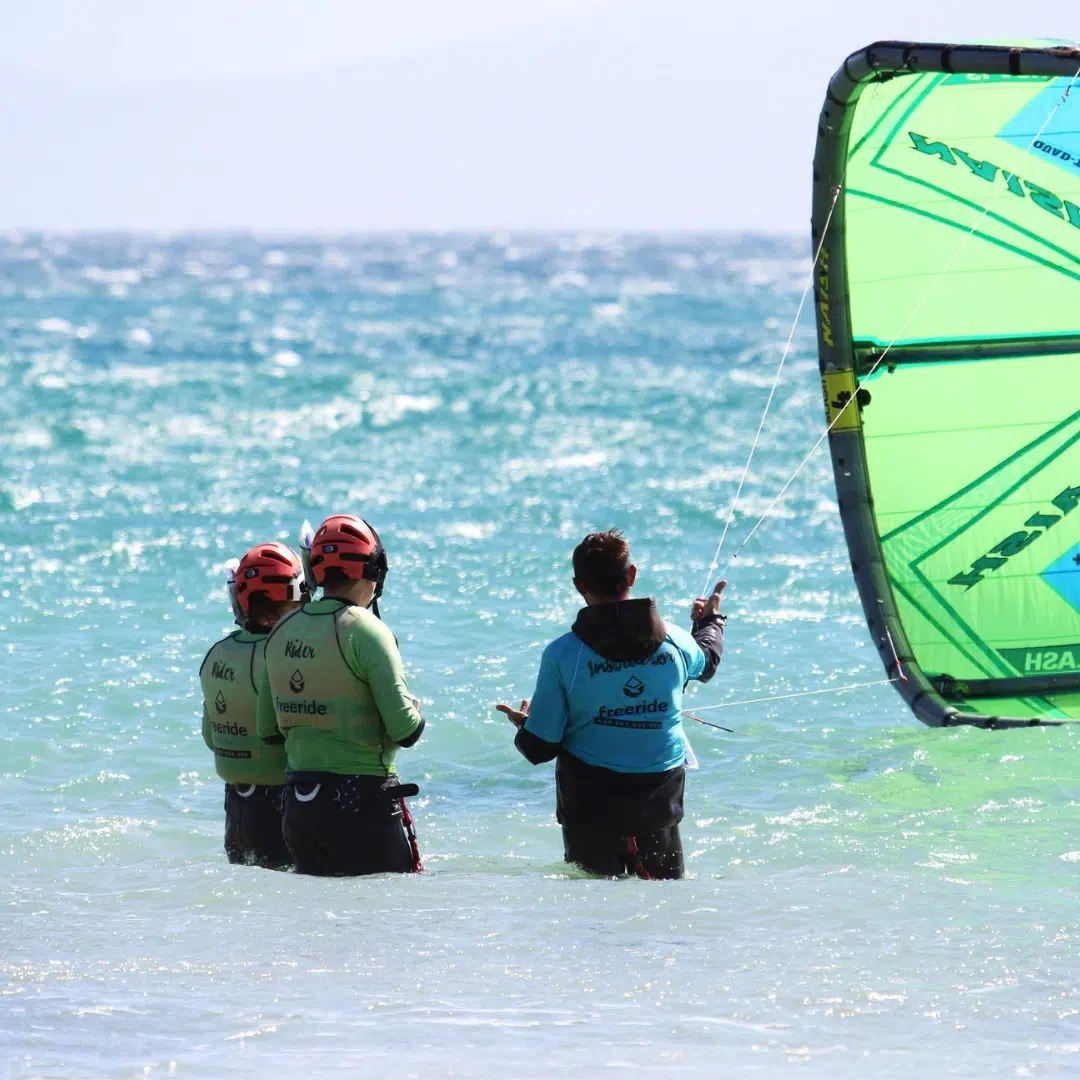
Water Relaunch
Crashing the kite is a natural part of learning process. You will master the specific bar inputs and line tension required to flip a crashed kite off the surface and back into the air (Water Relaunch). Furthermore, we cover Self-Rescue theory: learning how to pack down your lines and use your kite as a sail to reach the shore safely if the wind drops.
The Bridge to Kitesurfing – The Waterstart
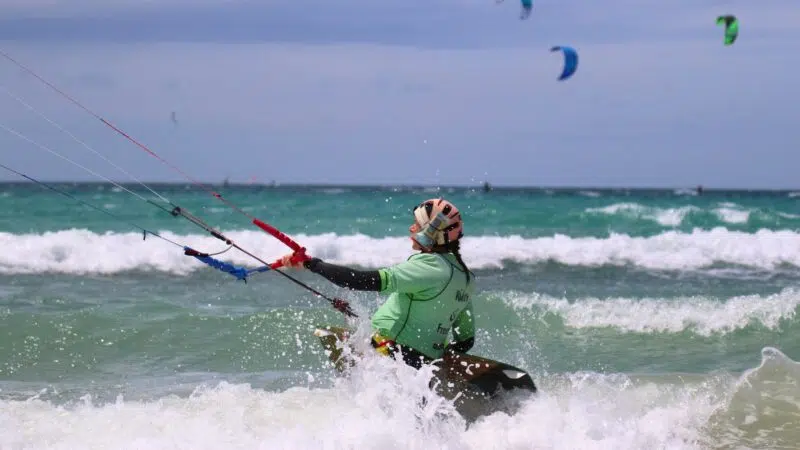
In the IKO curriculum, Level 2 Part B (sub-levels 2H and 2I) is the critical bridge between being a “kite flyer” and becoming a “kite surfer.” This is the moment the board is finally introduced to your feet.
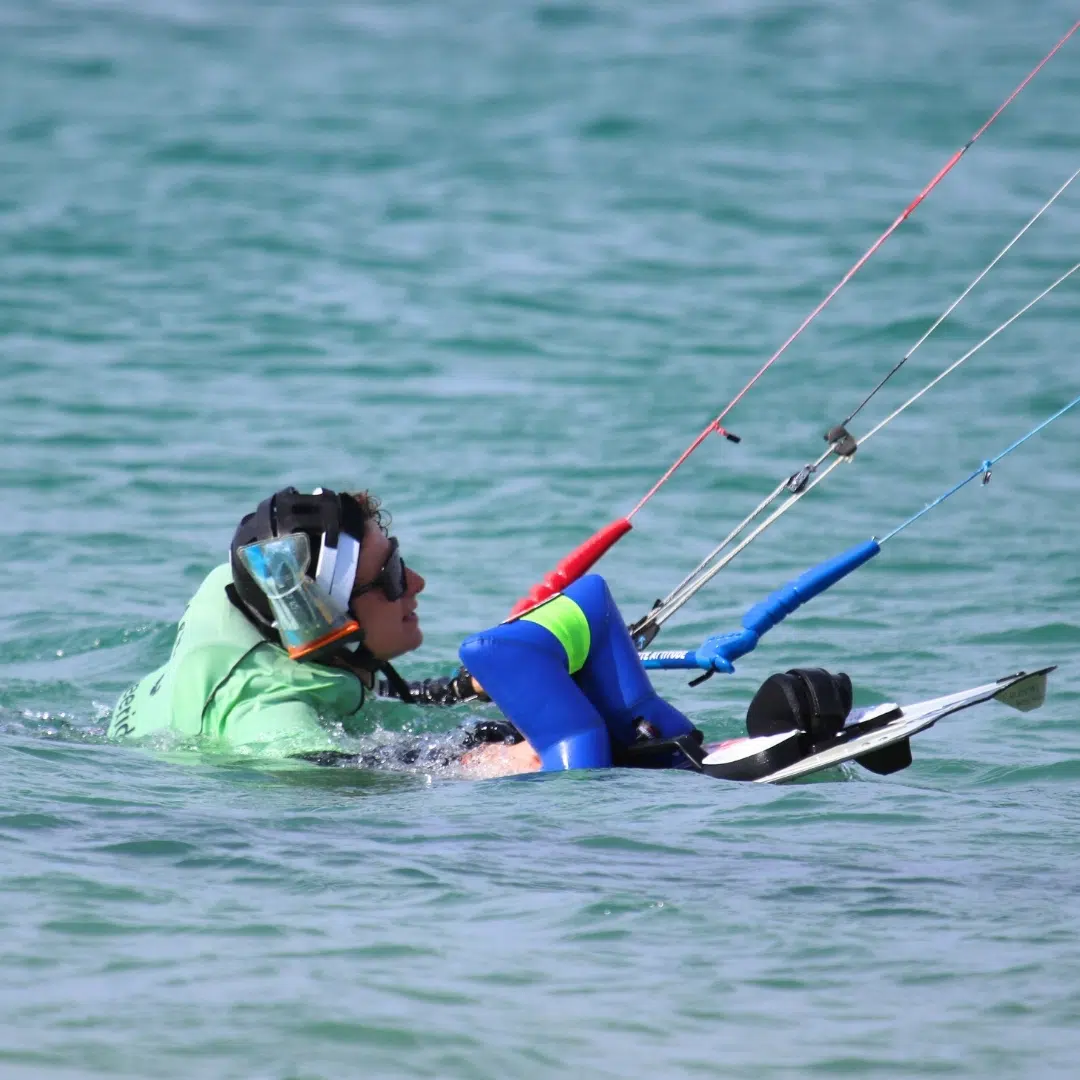
Board Management
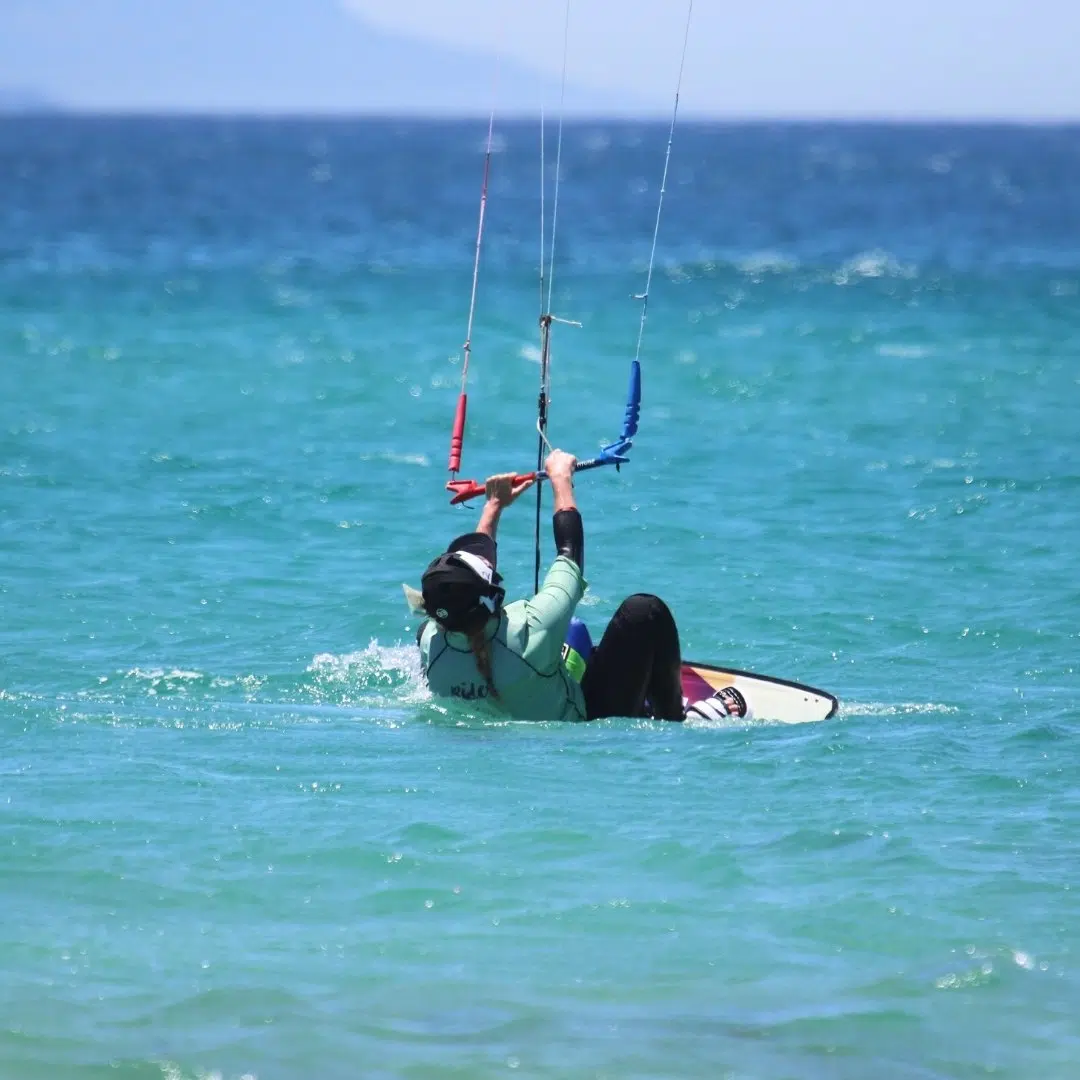
Managing the kite with one hand while holding the board with the other to practice steady pull, requires coordination. The secret to a successful start is The Crouch. You must keep your knees tucked tightly into your chest, to maintain balance against the water’s resistance. If your legs are too straight, the wind will simply flip you over before the board starts to plane.
The Power Stroke
This is the engine of the Waterstart. You will learn to “dive” the kite from the 12 o’clock position down into the power zone (usually toward 2 o’clock or 10 o’clock) to create the initial lift. The depth and speed of this Power Stroke must be precise; too shallow and you won’t have enough pull to stand up; too deep and the kite will pull you violently forward into a “face-plant.”
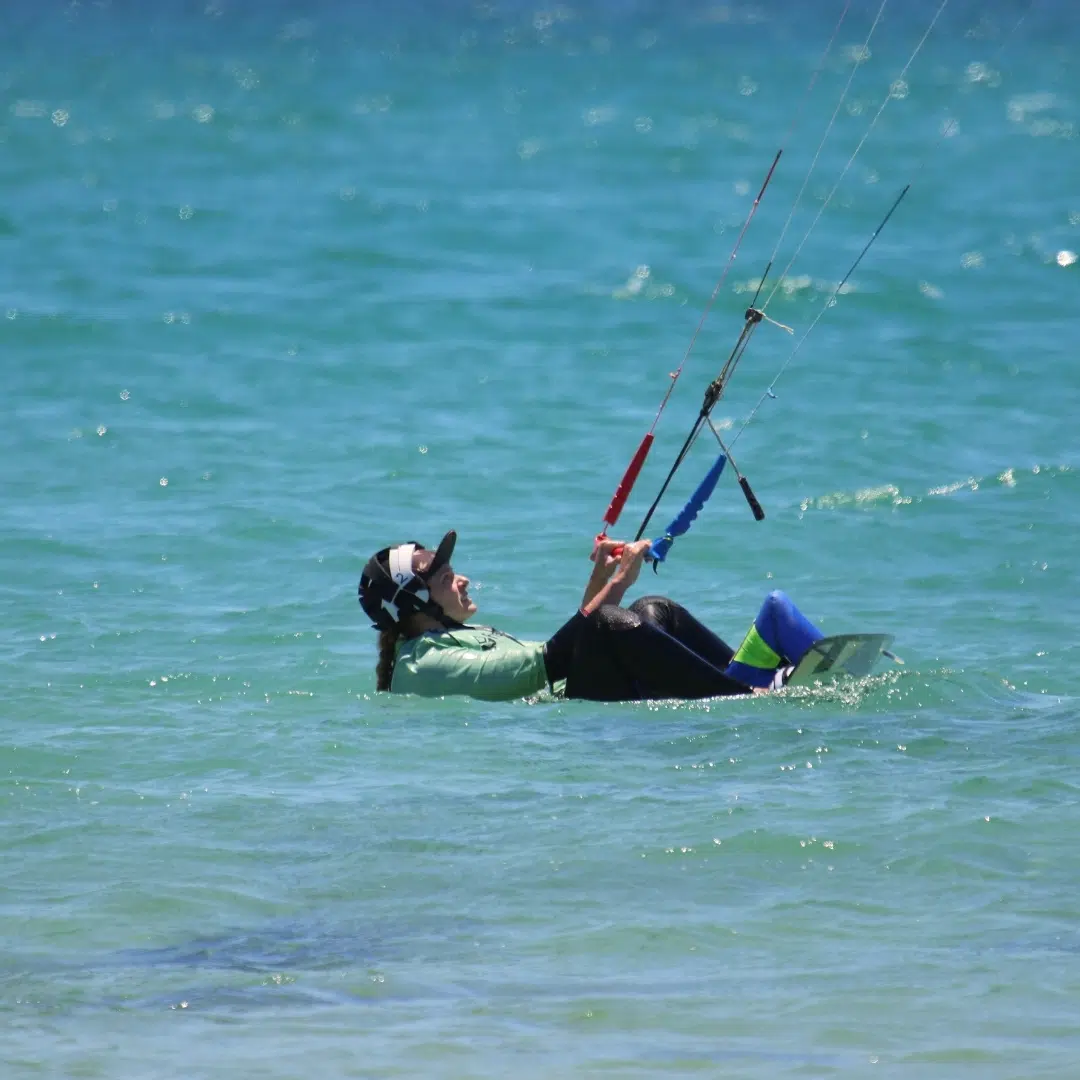
The Steady Pull & Stand-Up
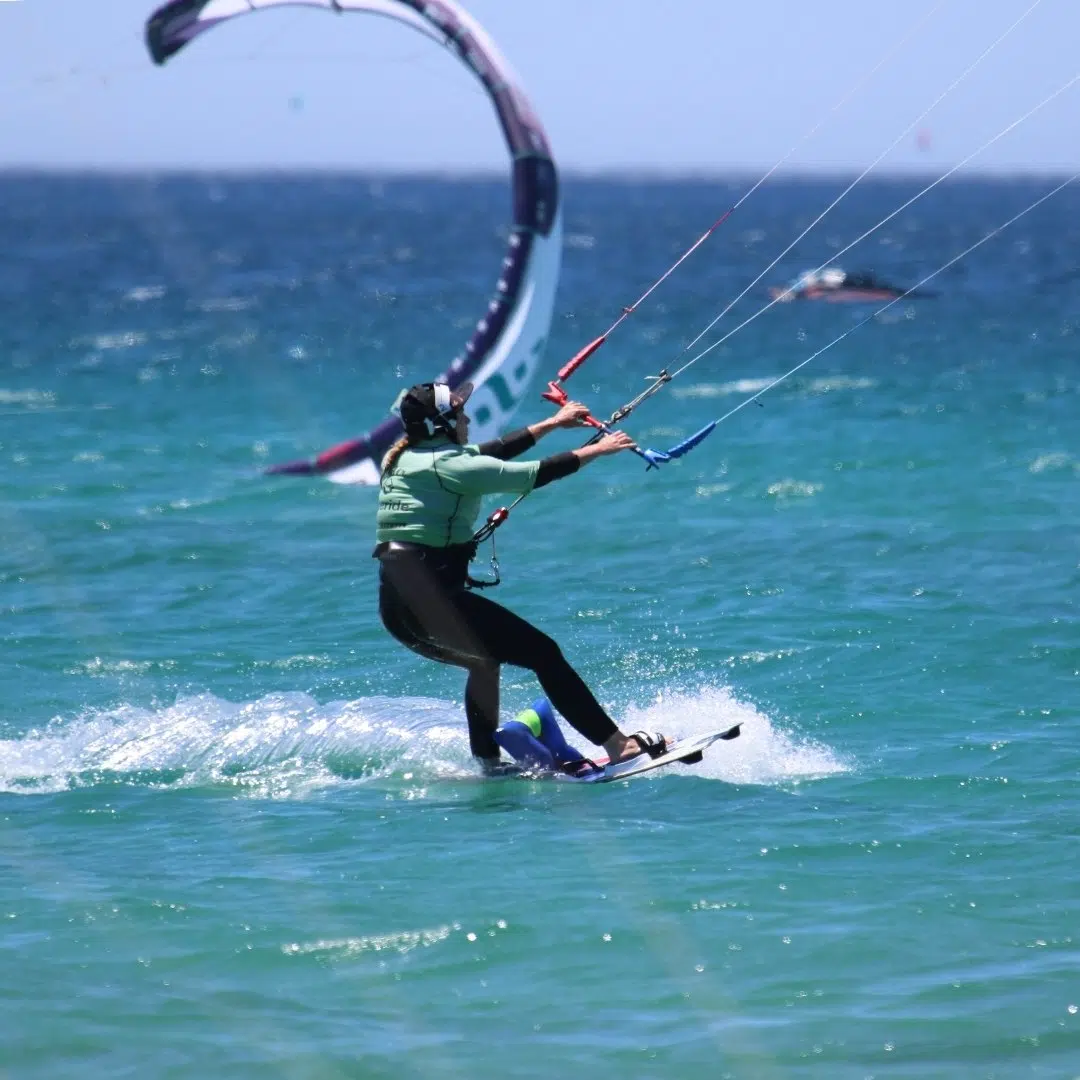
Once the kite starts pulling, you perform the Steady Pull. Instead of resisting the kite, you point the nose of the board slightly toward the wind (downwind) to gain initial momentum. As you feel the lift, you extend your front leg slightly while keeping your back leg bent. This helps the board plane on the surface rather than digging in like an anchor.
Controlling Riding & Stop
After standing up, the goal is to ride for 5–10 meters. You will learn to “park” the kite at a stable angle (usually 45 degrees) to maintain constant speed. Crucially, you will also practice the Controlled Stop, which involves steering the kite back up to 12 o’clock while sitting back into the water to gently kill your momentum.
Theory of the 'Right of Way' (ROW)
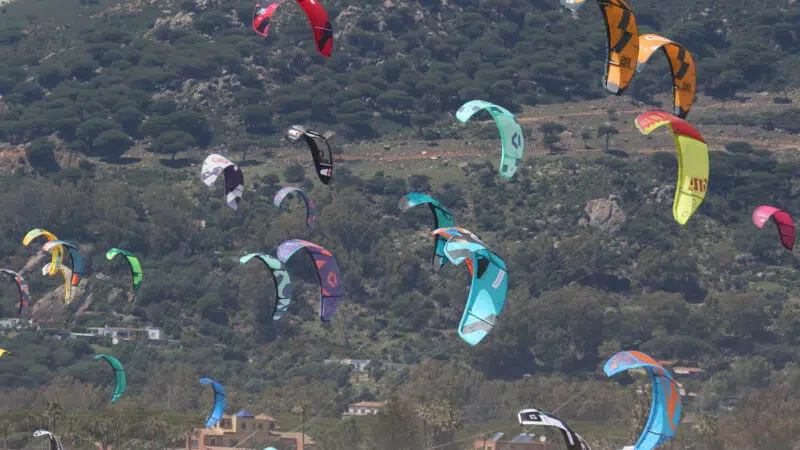
During this phase, we introduce the “rules of the road” for the ocean. In a busy spot like Tarifa, understanding Right of Way (ROW) is as important as the riding itself. You will learn who has priority when two kiters approach each other—usually the rider on the “starboard tack” (right hand forward). Mastering these traffic laws ensures a safe and professional environment for everyone in the water.
How many hours do I need to become Independent?
The gap between Level 2 and Level 3 is about muscle memory and “feeling” the wind. On average, in a high-wind destination like Tarifa, it typically takes 9 to 12 hours of water time to move from your first water starts to riding consistently upwind.
Our certified instructors and quality equipment provide the perfect environment to master your first waterstarts with total confidence. Whether you are struggling with the board or ready for your first meters, we have the expertise to get you up and riding.
Become an independent rider
You have completed your IKO level 2. Stop watching from the shore and start riding the Strait.