


The Kitesurfing Right of Way Rules
The Kitesurfing Right of Way Rules https://freeridetarifa.com/wp-content/uploads/2026/08/Right-Of-Way-Rules-Kitesurfing-Freeridetarifa-1024x1024.jpg 1024 1024 Freeride Tarifa https://freeridetarifa.com/wp-content/uploads/2026/08/Right-Of-Way-Rules-Kitesurfing-Freeridetarifa-1024x1024.jpgWhether you are a fresh-out-of-lessons beginner or a seasoned rider, crowded spots can get chaotic fast. Just like driving a car, kiteboarding has strict “rules of the road.” Knowing who has the right of way isn’t just about etiquette—it is vital to prevent catastrophic line tangles, runaway kites, and collisions.
Below, we break down the golden Right of Way (ROW) rules so you can hit the water with total confidence at any spot in the world.
Starboard Tack Has Priority
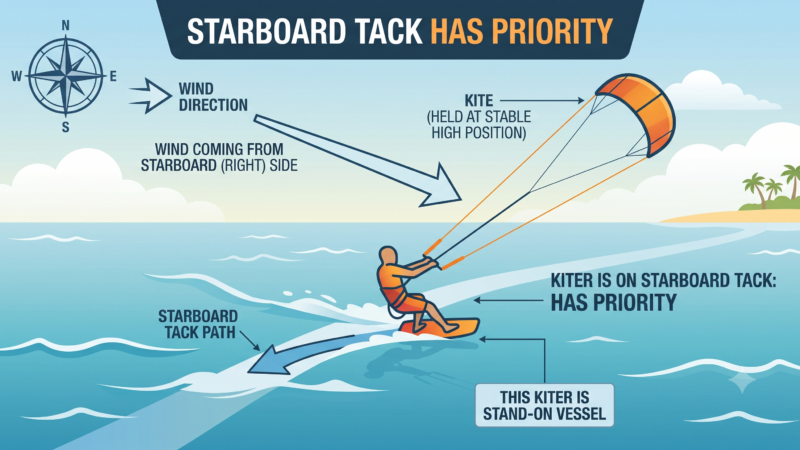
If you only remember one single rule from this guide, make it this one. It is the universal maritime standard for all wind-driven craft:
- Right Hand Forward (Starboard Tack): When riding with your right hand forward on the bar (kite positioned to the right of the wind window), you have the right of way. Hold your course and speed steadily so other riders can anticipate your path.
- Left Hand Forward (Port Tack): When riding with your left hand forward, you must yield and give way. Change your course early, slow down, or head downwind to stay out of the oncoming rider’s path.
- Easy Memory Trick: Right Hand Forward = Right of Way. Left Hand Forward = Look & Yield.
Passing Head-On: Upwind vs. Downwind Kite Position
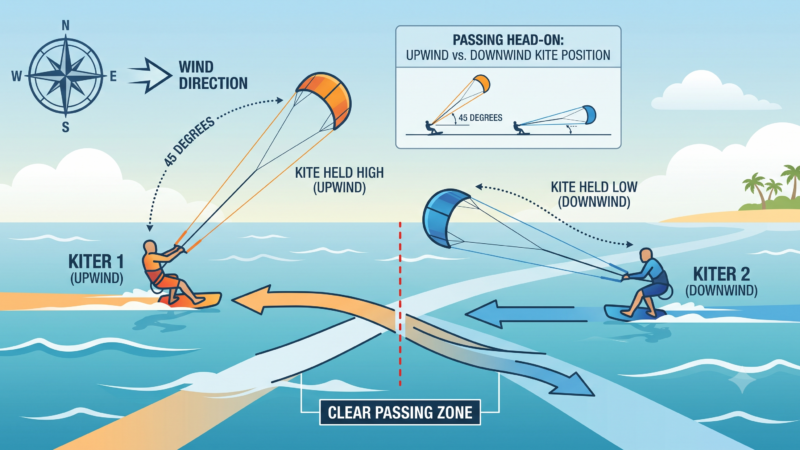
When two kiters approach each other head-on, shifting kite height creates a 25-meter vertical safety buffer so your lines pass cleanly without touching. Always follow these kite elevation guidelines during a pass:
- Upwind Rider (Closest to the wind source): Fly your kite HIGH (around 11 or 12 o’clock) so your lines pass above the other rider’s gear.
- Downwind Rider (Further away from the wind source): Fly your kite LOW (around 9 or 3 o’clock, close to the water) so your lines pass safely underneath.
Want to ride safely and with confidence?
Book your course with certified instructors in Tarifa
Entering the Water vs. Exiting
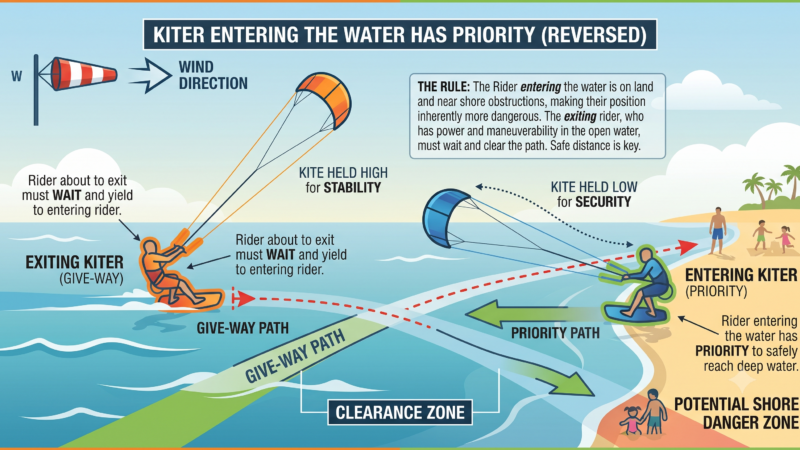
The shoreline is the single most hazardous area of any spot due to gusty wind, shorebreak, and land obstacles.
The kiter entering the water from the beach has priority over a kiter heading back into the shore to exit.
- Why? A rider launching or standing on the shore carries a much higher safety risk. Wind near the land is often gusty and turbulent; if a kiter gets lofted or dragged on sand, the risk of injury is severe. Give them space to get off the beach smoothly.
Overtaking & Wave Riding Etiquette
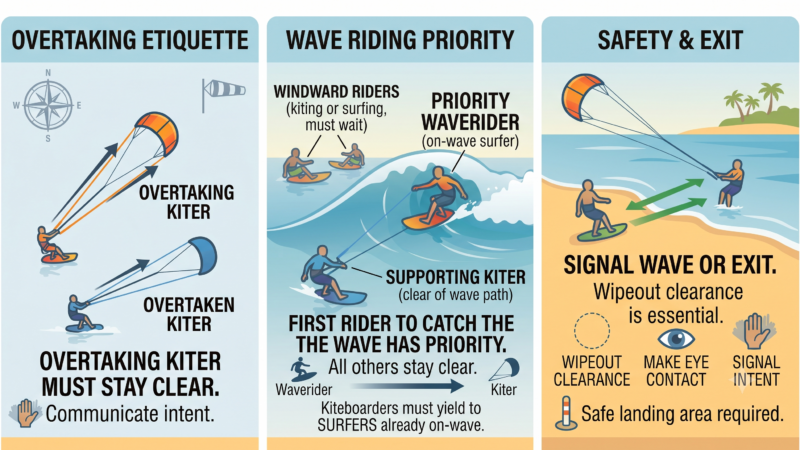
In specialized scenarios like overtaking or wave riding, strict safety margins apply:
- Overtaking: The faster kiter coming from behind must give way to the slower rider ahead. The lead rider cannot see behind them, so it is your responsibility to give a wide berth (at least 25 meters / one line-length) when passing.
- Wave Riders: A kiter who is actively riding/surfing a wave has absolute right of way over riders jumping or cruising, regardless of tack. Never jump or drop in on a wave rider’s line.
The Golden Rule of All: Common Sense First
Even if you legally hold the right of way, never assume the other rider knows the rules or sees you coming.
If an oncoming kiter fails to yield, always take defensive action: slow down, change direction, or lower your kite. Yielding your right of way is always better than tangled lines, broken gear, or proving a point in a collision.
Key Takeaways for Safe Kitesurfing Navigation
| Situation | Priority (Stand-On Vessel) | Give-Way (Must Yield) | Key Action / Rule |
|---|---|---|---|
| Passing Head-On | Upwind Kiter | Downwind Kiter | Upwind kiter raises kite high; Downwind kiter lowers kite low. |
| Opposing Tacks | Starboard Tack (Right hand forward) | Port Tack (Left hand forward) | Starboard tack holds course; Port tack yields and passes downwind/lowers kite. |
| Entering vs. Exiting Water | Kiter Entering Water | Kiter Exiting Water | Entering kiter has priority to reach deep water safely; Exiting kiter yields. |
| Overtaking | Slower / Ahead Kiter | Overtaking (Faster) Kiter | Overtaking kiter must keep a safe distance and steer clear. |
| Wave Riding | Kiter on the Wave | Kiters Outside / Surfers | Rider on the wave has right-of-way. Kiters yield to non-powered surfers already on waves. |
| General Safety Rule | — | Everyone | Common Sense First: Always maintain a safe buffer zone; avoid collisions regardless of rules. |
- Who has right of way in kitesurfing?
The rider on starboard tack (riding with their right hand forward on the control bar) has priority over kiters on port tack. The port tack rider must yield, change direction, or head downwind. - Where should you position your kite when passing another kiter?
The upwind kiter (closer to the wind source) must keep their kite high at 11–12 o’clock, while the downwind kiter must keep their kite low near the water (9 or 3 o’clock) to prevent line tangles. - Does a kiter launching from the beach have priority?
Yes, a kiter entering the water or launching from the beach has right of way over a kiter coming in to land, as gusty land winds pose a much higher safety risk to kiters on shore.
Ride Safely in Tarifa with Freeride Tarifa
Have questions about spot rules or want to brush up on your skills? Learn the Kitesurfing right of way rules with Freeride Tarifa!